
Case study 04 · Hours Audit
Where do your hours go?
The people who run each process answer questions about it, show us real examples and sign it off. The report turns their answers into hours a week, rates every process and ranks what to fix first. Our own product, shown with a sample builder.
- Project
- Hours Audit
- We built
- A discovery portal and the report it produces
- Connections needed
- None. It runs on your team’s answers
- Status
- Real software, shown with sample answers
What it solves
Everyone feels the admin. Nobody has counted it.
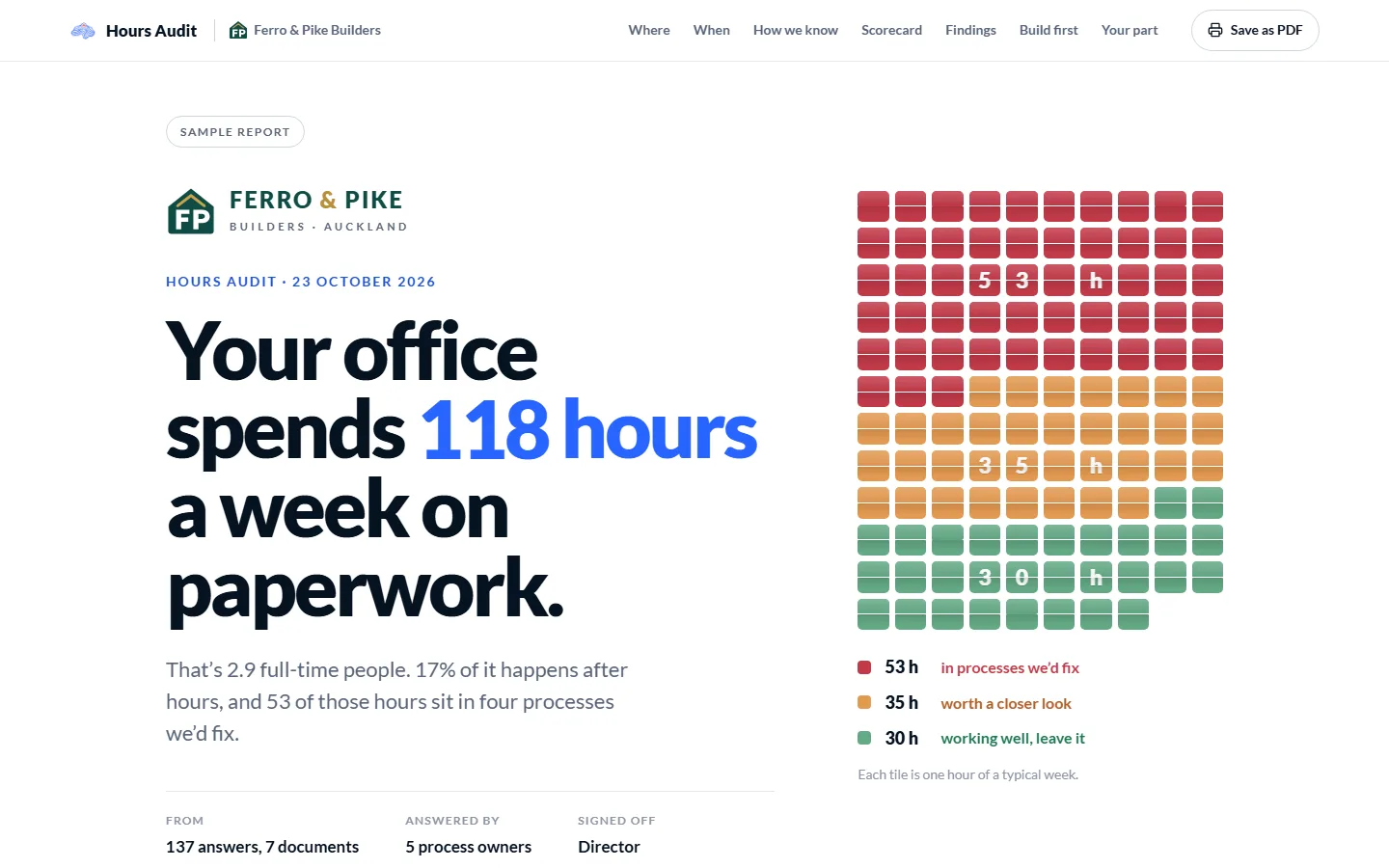
Before anyone quotes a build, the audit shows where the hours actually go, process by process, from the people doing the work.
Where do our hours actually go?
Every process in hours a week: how often it happens, times how long it takes, times the people involved. The sum is shown, not hidden.
What should we fix first?
Each process is rated red, amber or green from signs of waste, like details typed twice or people chased every week, then ranked by hours.
How do we know the numbers are real?
They come from the people who run each process, using real examples, checked on a follow-up call and signed off before the report is built.
Do you need access to our systems?
No. Nothing connects to your email, files or accounts. Your team answers, uploads what it chooses, and signs.
What will it ask of my team?
The plan shows every step, who it falls on and for how long, before anything starts.
What would we build?
Where the worst processes share a job, the report proposes one system to fix them together, with the hours it covers.
01 · The pain
A big build on a hunch.
Most businesses buy software on a feeling that one job is heavy. The audit replaces the feeling with a count, so the first build goes where the hours really are.
- Admin that eats evenings and weekends, with no one sure how much.
- The same details typed into three places, every week.
- Chasing people for paperwork that should arrive on its own.
- Quotes for software that solve the loudest problem, not the costliest.
The brief Show us where the hours go, in numbers we can stand behind, before we spend anything on a build.
02 · Try it
Read the sample report.
Scroll it as a client would. Then try the discovery portal: open it, fill it with the sample builder and sign it off. Anything you change stays in your own browser.
03 · What it does
From answers to a ranked plan.
Questions that follow the answers.
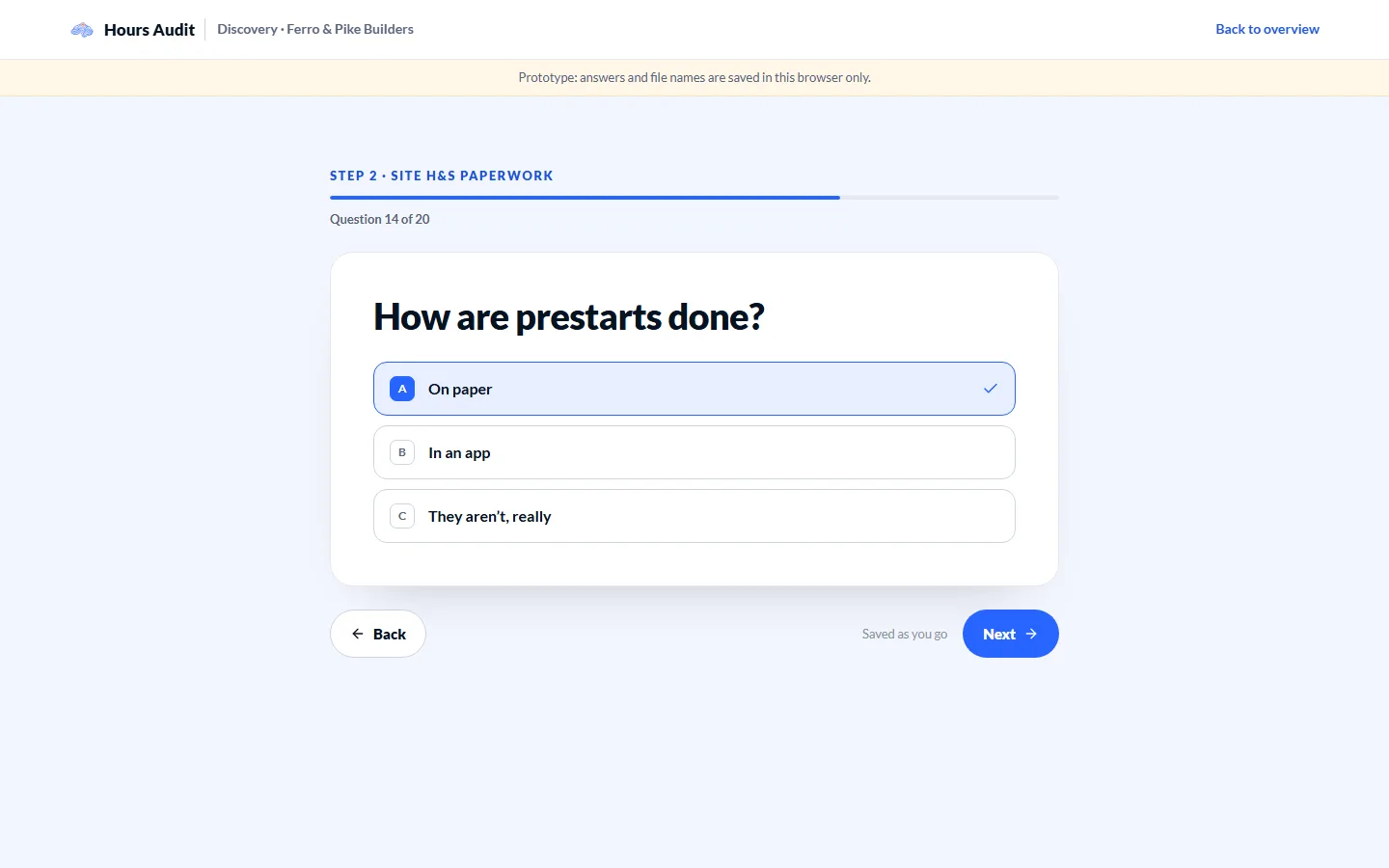
The owner answers about the business and picks the processes; each one goes to the person who runs it. Say prestarts are on paper and the next question asks what happens to the paper. One question at a time, saved as they go.
Read back, then signed off.
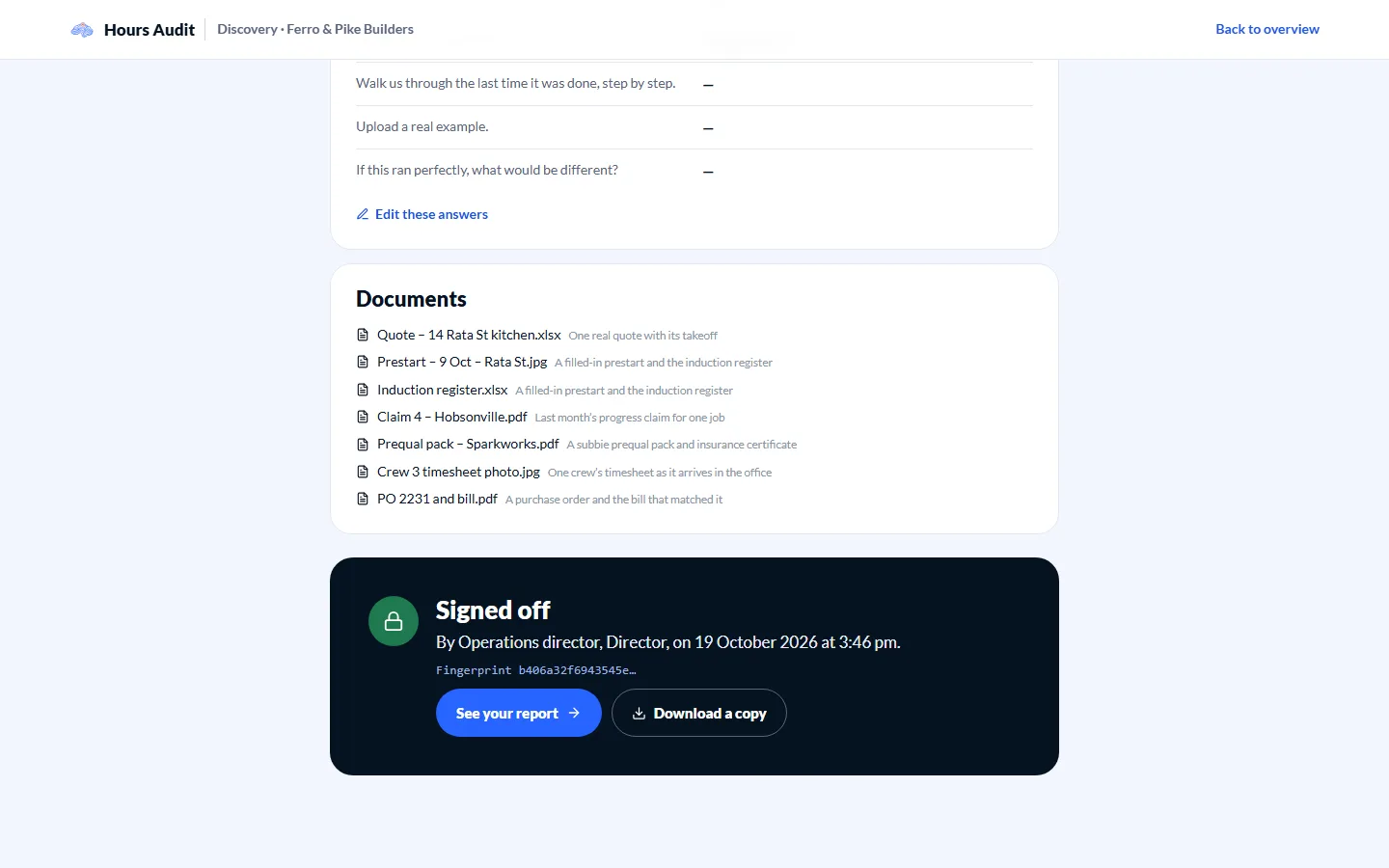
Every answer and document in one place to check. The signer confirms it’s right; the signed copy is fingerprinted, so any change afterwards shows and asks for a new signature.
The sum, shown for every process.
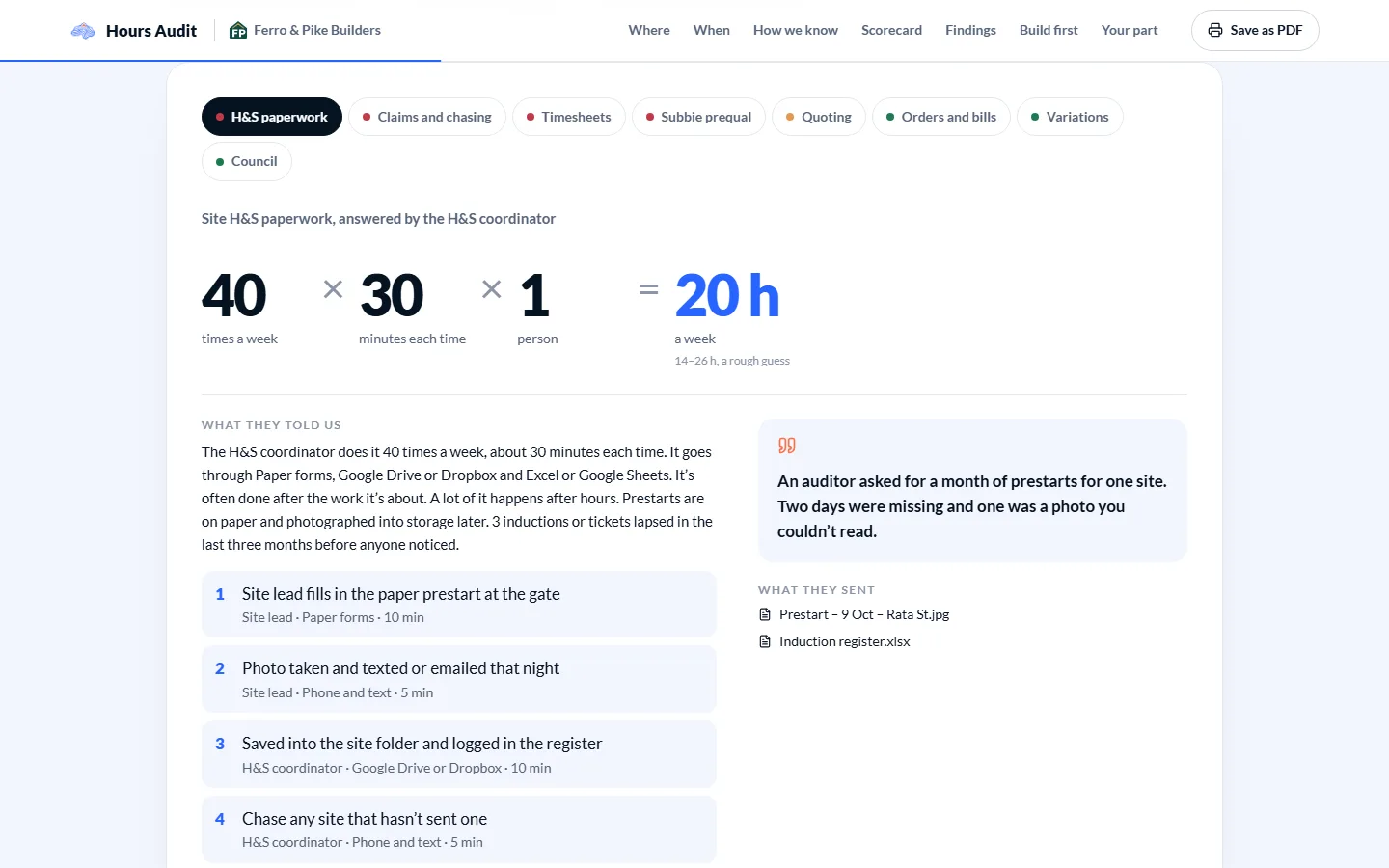
Times a week, times minutes, times people, equals hours a week, with a range for guesses and a tighter one for counted numbers. Beside it, what the process owner said and the documents they sent.
A scorecard they keep.
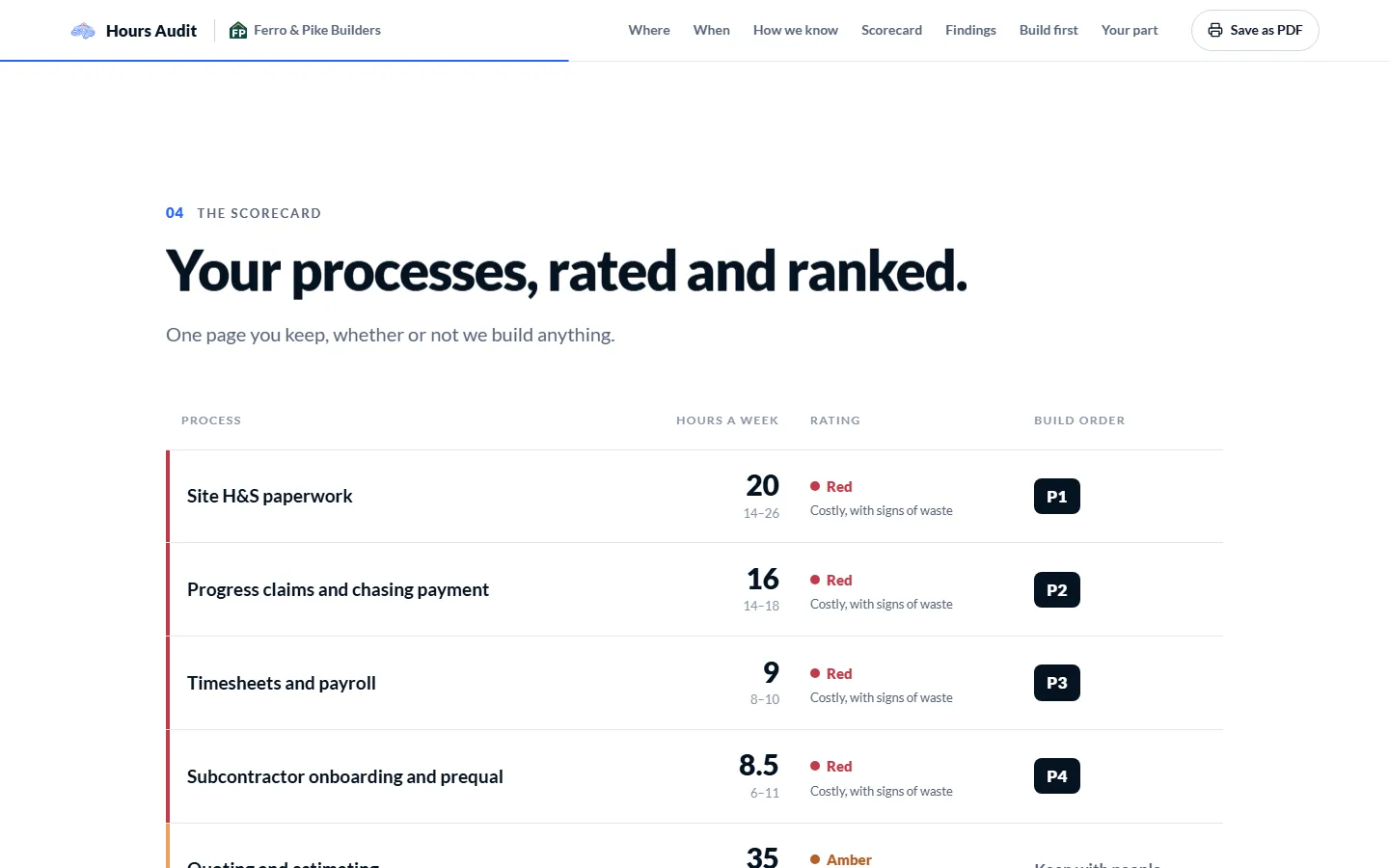
Red, amber or green for every process, and a build order: P1, P2, use what you have, keep with people, or leave it. One page, whether or not anything gets built.
The plan, honest about the time.
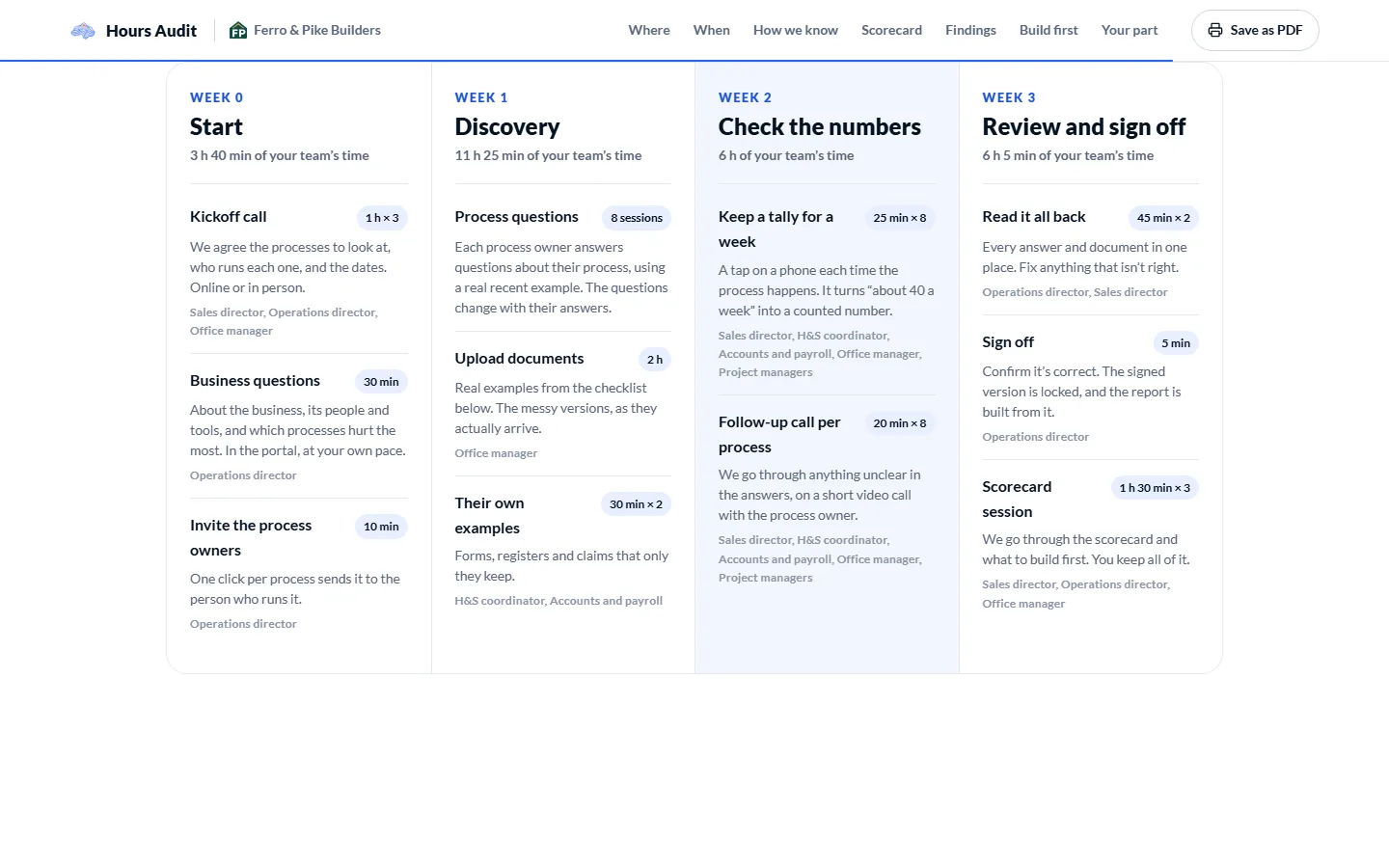
Four weeks, every step, who it falls on and how long, added up by person. No pretending a real audit takes an afternoon.
On the phone, too.
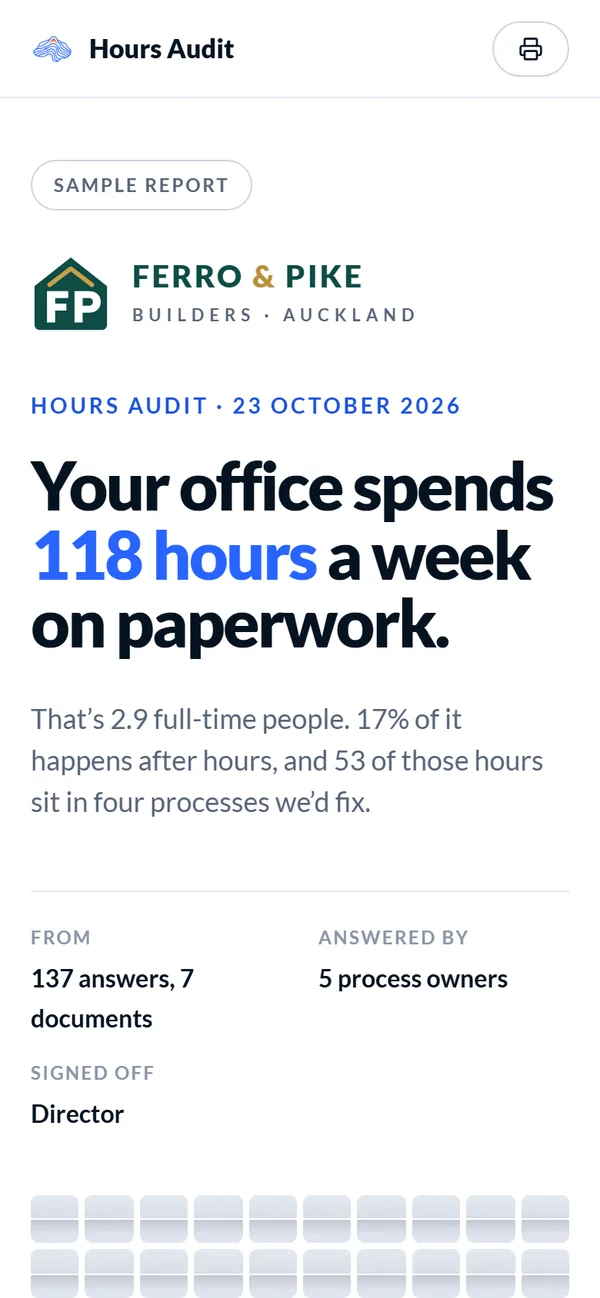
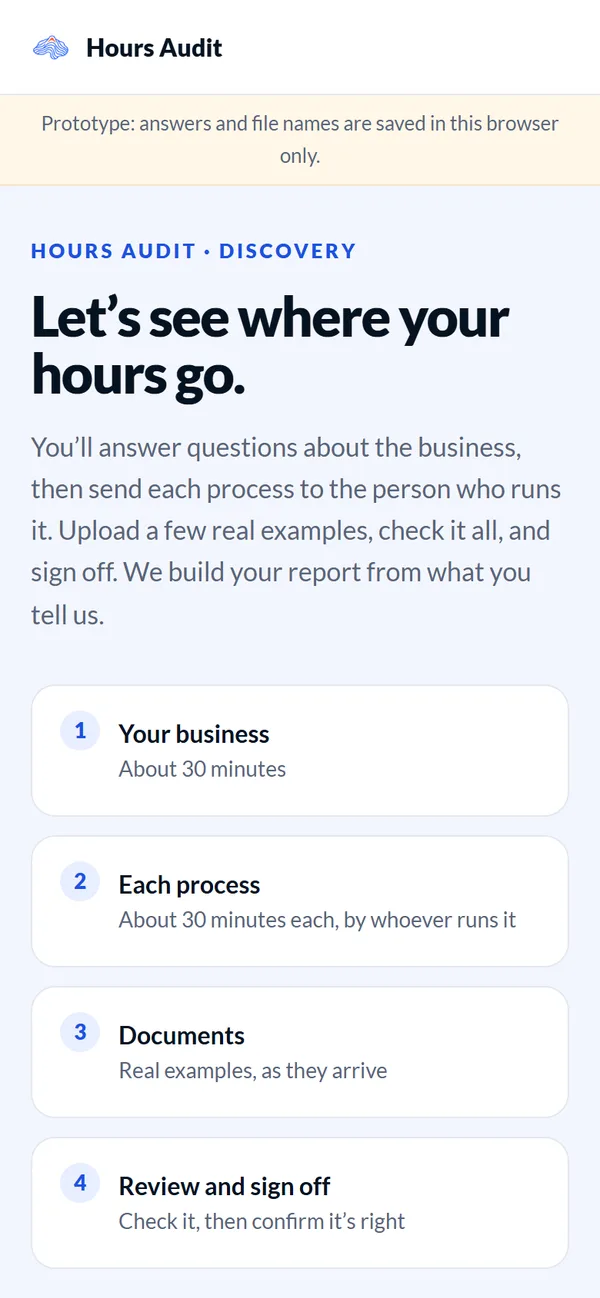
Process owners can answer on site, between jobs. The report reads on a phone as well as it prints.
The system behind it
Built on trust, checked by signature.
- The job it replaces
- Guesswork, a few interviews and a spreadsheet nobody checks.
- The data and rules
- Business answers, per-process answers, uploads and a sign-off. Hours, ratings and the build order are worked out from them.
- What runs on its own
- The next question, progress, the read-back, the fingerprint, and the whole report.
- Where it lives
- Your answers are used for your audit and nothing else, and you can download them at any time.
04 · Under the hood
Every number traceable.
- Automated tests
- 11
- Processes in the sample
- 8
- System connections
- 0
Branching questions
Each answer can change what comes next, and answers that no longer apply are dropped, so nothing stale reaches the report.
Maths you can check
Hours, ranges, ratings and the build order are worked out from the answers and covered by tests.
A real sign-off
The signed answers are fingerprinted. Edit anything afterwards and the report asks for a new signature.
Prints as a report
Save it as a PDF and every number, chart and chapter comes with it.
React 19 · Vite · Motion · NumberFlow · Lato
Where are the bottlenecks in your business?
How many hours could you save each week?
Start with seven quick questions about the work that repeats, the places it gets retyped and who chases it. It’s the first step of an Hours Audit.
Seven quick questions. You see your first answer before we ask for an email.
Where do your hours go?
Start with a conversation about the process that eats your week. Ferro & Pike Builders is a sample business; the answers are sample data run through the real software.
It’s yours. No one else owns it.